
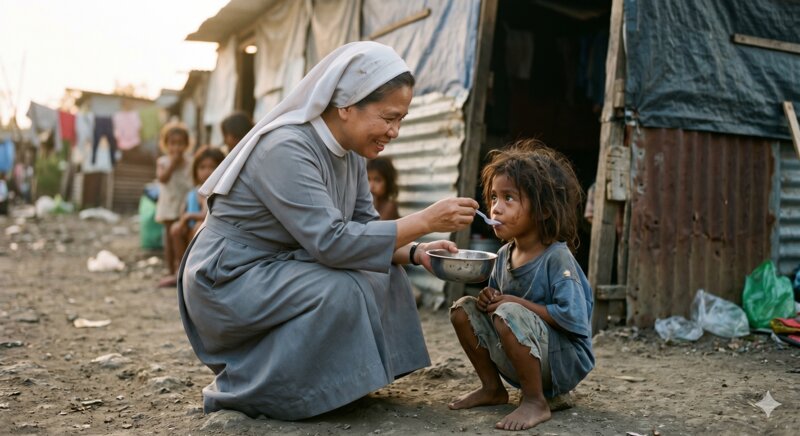
When Love Becomes a Moral Choice
A personal reflection on agape as chosen love: the moral will to seek another’s good, from ordinary acts of service to costly courage in family, community, and history.
Published June 13, 2026
There are kinds of love that rise like instinct and kinds that must be chosen. Agape belongs to the second sort. It begins in small courtesies, a door held, a burden shared, but it grows into something stronger: a love that refuses to look away from the truth, even when the cost is heavy. It is the quiet force that holds families together, and at times, the fierce courage that has held nations together, too.
I’ve spent a good part of my life trying to understand agape, the kind of love that places the good of another before our own good. I’ve worn the edges off books by theologians, philosophers, and storytellers, hoping one of them might finally give me a definition that felt solid in the hand instead of misty in the air.
But most people don’t live inside definitions. They live inside relationships. They love their families, their friends, their work, their country. And somewhere along the way, we began using a single word, love, for things that are very different in nature.
We love with affection. We love with loyalty. We love with desire. And often we hear, “I love purple” or “I love hamburgers,” which is not love at all.
And so there is agape, the love that asks for the good of the other even when it costs us something.
The trouble is, when all these loves are folded into one word, we lose the ability to see what agape actually is. And when we lose sight of agape, we begin asking our other loves to carry a weight they were never designed to hold. Agape is not about the emotion of loving your family, spouse, or friend.
The trouble is, when all these loves are folded into one word, we lose the ability to see what agape actually is. And when we lose sight of agape, we begin asking our other loves to carry a weight they were never designed to hold. Agape is not about the emotion of loving your family, spouse, or friend.
Why Agape Is So Hard to See
In my engineering work, my first question is almost always why. Why is the system built this way? Why do you do it that way? Most people answer with a shrug: “Because that’s how I was taught,” or “That’s what the software requires.” If I press too hard, they get frustrated. I get a blank stare.
But the reason I ask is simple. If I understand why something is done, I understand not just the action, but the purpose behind it. And once I understand the purpose, I can begin to tell what truly matters. Often, people do things out of emotional or without purpose.
I have felt that same blank stare when reading theologians and philosophers explain agape. There is often a first, honest “huh” moment, as if the mind has heard the words but cannot yet put its hands on the thing itself. Sometimes agape has to be trusted before it is fully understood, not blindly, but by that intrinsic tug that tells us something is true. We recognize it most clearly when charity becomes an act done with purpose, when someone chooses the good and the act itself carries the knowledge with it.
Agape is not a natural love but is a bridge between natural and supernatural.
What Agape Is
Agape is a love of the will... blank stare. It is the steady, chosen orientation of life toward the good of the other, without the demand for return. It is an intrinsic motivational force that knows the difference between right and wrong. It is that opportunity for goodness we often neglect to make part of our character, our anchor of integrity. It is what communities rise on and, when neglected, fall from.
Agape is not a feeling that rises on its own. It is a call of duty that originates from an innate desire, a choice to do good for the sake of good. Not just in grandeur, but often in something small. It is helping someone who dropped something, holding a door for someone else who looks like they need it more than you. If we practice these small things, little by little we build our character to be capable of doing great things with agape. To live out agape, we must constantly challenge our weaknesses to become better human beings and to be able to recognize agape. Although agape is founded in theological truths, those truths are written into our biology but activated by our will.
You can build a life on affection or desire or friendship, but the walls will lean with time. Agape is the foundation stone, the thing that keeps the whole structure square. When societies forget this stone, the buildings still go up, but they twist, crack, and finally fall.
The other loves arise naturally. Agape does not. Agape must be chosen.
Why Agape Is More Than Instinct
Animals can and do endanger themselves for another. A mother wolf may risk everything for her pups, starve herself, fight off larger predators, or leave the safety of the pack if she senses her litter is threatened. It looks noble, and in its own creaturely way it is beautiful.
But self-endangerment alone is not agape.
The wolf’s devotion is bound to instinct, attachment, survival, and the preservation of the pack. She nurtures her pups with fierce tenderness. She bonds with her pack, playing, grooming, defending, and sharing kills. She may seek and keep a mate for a season. These natural loves run deep, but they remain governed by nature.
That does not mean animals are mere machines. Many animals show attachment, distress, cooperation, and even responses that resemble empathy. The point should not rest on one experiment with chimpanzees or any other creature. The deeper question is moral freedom.
A weakened pup may be abandoned so the stronger ones survive. Not because the mother wolf has made a moral argument against mercy, but because instinct and survival have taken command. There is no evidence of conscience wrestling with guilt, duty, repentance, or righteousness. There is no visible capacity to stand over instinct and say, “This costs me, and it may even go against my own advantage, but your good is still good, and I will choose it.”
A wolf can be loyal, protective, affectionate, and playful. What it cannot do is practice agape as a moral act of the will.
That capacity belongs to human persons. We can feel instinct and still challenge it. We can desire comfort and still serve. We can fear loss and still choose truth. We can be tempted toward self-preservation and still offer ourselves for the good of another.
That is why agape is not biological reflex. It is moral freedom. And that freedom is both our greatest dignity and our greatest burden.
Agape as the Binding Force of Community
Carol, my wife, doesn’t care much for wrestling with theological or philosophical knots. Our children sometimes call her “Martha,” with a teasing sort of affection, the one busy in the kitchen while others sit and talk. The one making sure the world actually holds together. If you're wondering why “Martha,” think “Mary”; more on that later.
It’s easy to misunderstand that kind of life.
Her love is wrapped in potatoes mashed just right, in clean clothes folded, in quiet acts that ask nothing in return. Without that kind of love, listening would starve. Without that kind of love, conversation would have no place to sit.
Community is born in that tension between the ones who reflect and the ones who serve. From the earliest villages, survival was not possible without someone tending the fire, someone hunting, someone keeping watch. Over time, those small tasks grew into cultures, customs, and eventually civilizations.
Underneath all of it was the same truth: we only endure when someone chooses the good of another over their own comfort.
That same choice preserved books when empires fell. It built places of learning from cathedral schools into universities. It turned care for the sick into hospitals rather than abandonment.
Agape does not announce itself. It builds quietly and holds the whole structure together.
The Cost of Agape
Agape doesn’t stay small. It may begin with opening a door or folding a shirt, but like every virtue, it grows according to the weight it’s asked to carry. Most days that weight is light. Some days it isn’t.
History remembers the rare moments when agape had to lift more than any human being should: Desmond Doss climbing a blood-soaked ridge again and again, pulling wounded men to safety while refusing to carry a weapon; a lone nurse in a Civil War field hospital holding the hand of a stranger as cannon fire split the night; people who ran toward what everyone else ran away from.
Their acts weren’t accidents of courage. They were the same agape we practice in kitchens and hallways, only stretched to its breaking point. And in that stretching, something extraordinary happened: the love that begins in the ordinary becomes strong enough to hold another person’s life, and sometimes to save it.
But agape does not only work through individuals. Sometimes it asks something of an entire people.
In our own history, the Civil War was one of those moments. A nation built on the words “all men are created equal” had been living with a wound at its center, millions held in bondage while the culture tried to pretend it could keep its moral promises without freeing them. For a long time, it was easier to look away, to bargain with the wound rather than face what healing would cost.
Eventually, the cost of looking away became greater than the cost of facing it. The country tore itself apart rather than keep making peace with a lie. Mothers buried sons in blue and sons in gray. Towns emptied. Fields turned into graveyards. No one who lived through it would have called the moment noble. It was heartbreak.
And yet, buried inside that heartbreak was a hard kind of agape, not sentiment, not political convenience, but the conviction that a people cannot flourish while some of its members live in chains. A nation chose the road that might break it rather than the road that would corrupt it forever.
Agape at that scale doesn’t look like tenderness. It looks like leaders who tell the truth when lies would be cheaper, and ordinary people willing to pay a price so someone else can be free.
Most of us will never stand at that kind of crossroads. We won’t sign declarations or lead armies. We may never face anything as dramatic as a battlefield or the tearing of a country.
But the same law applies in our smaller lives: there are lies we can live with, and lies that will rot us from the inside.
Agape is what nudges us, a whisper at first, toward the harder truth.
And the love we begin in simple acts becomes, over time, the kind that can carry the weight of a soul, a family, a community, or even a nation. Agape in practice makes us better.
Agape and Transformation
Agape is not sustained by willpower alone. If it were, it would eventually collapse under the weight of fatigue and resentment.
Transformation is its root. The ego is often the victim.
Prayer, at its core, is not merely asking for things; it is the request to be changed, to have our character shaped, softened, clarified, and strengthened so that we may become capable of choosing the good of the other more freely and more faithfully.
When a person changes, even slightly, the community around them changes as well. The fabric tightens. Trust grows. Life becomes possible again.
What This Means for the Other Loves
The other loves are not wrong. They are beautiful. They are necessary. But they are not strong enough to carry the full weight of the human heart on their own.
Affection can fade. Friendship can fracture. Desire can turn inward.
Agape is not a mood; it is a compass needle that always points toward the good of the other. It does not wobble with our emotions or agendas. Turn it however you want; it will not point to you. It cannot do selfish things.